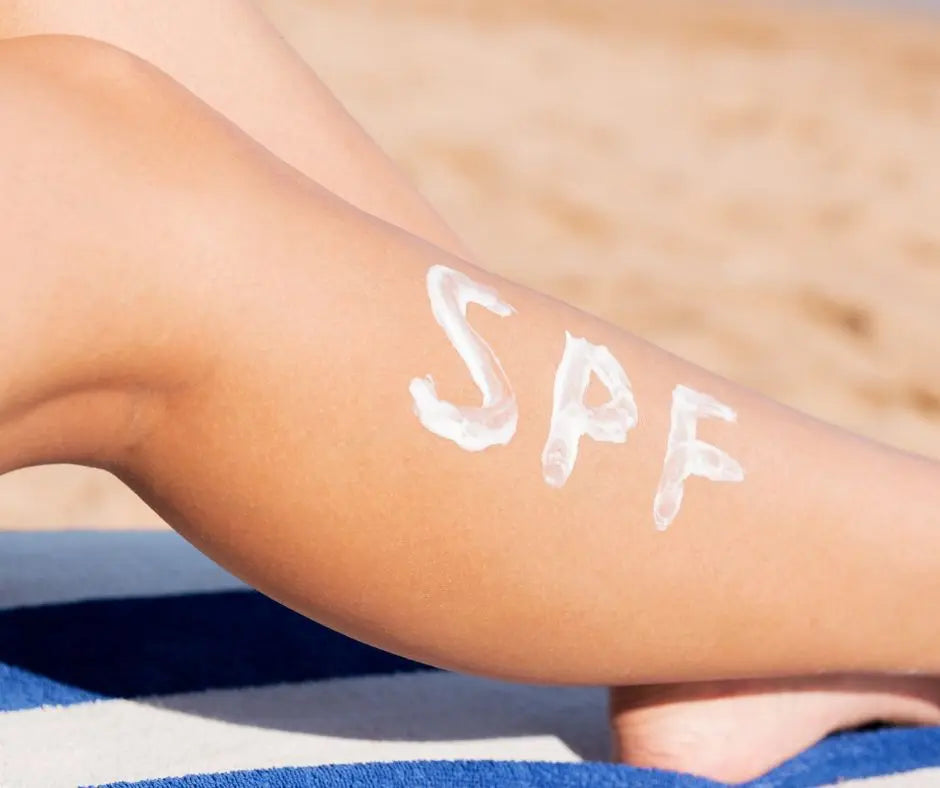
Yes, you can get sunburnt in winter in Australia. It surprises people every year, but it's true: the sun can still damage your skin on a cold, clear July day. The reason is simple. What burns you isn't the heat, it's the UV, and the two don't always turn up together. So the short answer is to stop reading the temperature and start reading the UV index, which tells you exactly when your skin needs cover, summer or winter.
Here's what that means in practice, and where in Australia it matters most.
Why cold days can still burn you
Warmth and sunburn feel like the same thing, so we treat them as the same thing. They're not. The warmth on your skin is infrared, whereas the burn is ultraviolet (UV), and you can't feel UV at all. On a hot summer day they arrive together, which is why "I can feel the sun" has always been a good cue to cover up. In winter, the heat drops away, but the UV can still be strong enough to do damage if it is reaching UV level 3. The trap of winter sun is that people often don't bother applying sunscreen as it doesn't feel like they need to, but unfortunately our skin just has no way of warning you. In this post, we explain this in more detail to understand why winter sun and cloudy days can catch people off-guard.
The only number that matters: UV3
It's not the temperature you want to watch, it's the UV index, and the threshold is 3. Whenever the UV index is 3 or above, it's strong enough to harm unprotected skin, and that's when sun protection is worth doing. This is the advice from ARPANSA, our national radiation protection agency, and from the World Health Organization. It's the same line all year. The only thing that changes in winter is that you have to check it, because you can't guess it from how the day feels.
The Bureau of Meteorology publishes daily sun protection times for every part of the country, and free UV apps show you the live level where you are. A two-second glance tells you more than the thermometer ever will.
Does winter UV actually hit 3 in Australia? Often, yes
This is where being an Australian brand matters, because the answer depends heavily on where you live. The continent is huge, and winter looks completely different in Darwin than it does in Hobart.
Here's roughly how a typical winter midday looks across the capitals. Always check BoM for your actual day, but as a guide:
| Where you are | Typical winter midday UV | Sunscreen weather in winter? |
|---|---|---|
| Darwin, Cairns, Townsville | 5 to 7 (high all year) | Yes, every day |
| Brisbane, Perth | Around 3 to 4 | Yes, most days |
| Sydney, Adelaide, Canberra | Around 1 to 3 | Often, worth a check |
| Melbourne, Hobart | Usually below 3 | Usually not, but check |
In Queensland, the Northern Territory and northern Western Australia, the UV stays high enough for sun protection every single day of the year. Melbourne and Hobart are the only capitals that usually sit under 3 through the depths of winter, and even then it can still climb above 3 on some days. The takeaway: most of Australia is in sunscreen territory for at least part of winter, and the top end never leaves it.
The slopes are the sneakiest of all
If your winter involves the snow, the risk goes up, not down. Fresh snow reflects as much as 80% of UV back up at you, so you're getting hit from above and below at the same time. Add altitude, where the thinner air filters out less UV, and a day on the mountain can give your face a stronger dose than a summer arvo at the beach. It's why people come off the slopes with a windburnt-looking glow that's actually sunburn, usually on the nose, cheeks and ears.
If you're heading to Thredbo or Falls Creek these school holidays, sunscreen goes on the packing list right next to the gloves.

A sheer, light-tint SPF50 with Vitamin C from Kakadu Plum. Wear it as is for a natural look or under makeup, for daily face cover when the UV's up but the heat isn't.
So who needs sunscreen in winter?
The honest answer is not everyone, and not every day. If you're in Melbourne in July and the UV's sitting at 1, you don't need to slip-slop-slap just to check the letterbox. But plenty of us need it more often than we think:
- Anyone up north. If you're in QLD, NT or northern WA, winter changes nothing. UV 3-plus is your normal.
- Everyday faces. Your face catches the most light, all year, and it's the bit that shows sun exposure first. A daily SPF50 on your face is an easy winter habit, even in the south.
- Kids and bubs. Little ones are out in it at school sport, the park, weekend footy. When the UV's 3 or above, they need the same cover they'd get in summer.
- Snow and high-country days. As above, this is the one to never skip.
For the littlest ones, the first line of defence is the advice every Australian parent knows: keep babies out of direct sun where you can, and reach for shade, clothing, a hat and good timing before anything else. Sunscreen for babies under six months is best talked through with your doctor, and it helps to know that mineral and chemical sunscreens are not the same thing. We've written a full parent's guide to baby sun protection covering exactly that, including what makes a non-nano zinc formula different and what to look for when other measures aren't enough. For older babies and toddlers, sunscreen goes on after those other layers, on the bits you can't cover.

Fragrance-free mineral SPF50, made for delicate skin. Gentle enough for the school-sport sideline and the winter park run.
What to do this winter
Just shift the habit from "is it hot?" to "what's the UV?":
- Check the UV index, not the temperature. A free UV app or the BoM sun protection times. If it's 3 or above, you're on.
- Cover the bits that catch the light. Face, ears, neck, hands. A broad-spectrum SPF50 does the job.
- Don't pack the sunscreen away after summer. Especially if you live up north, or you're heading to the snow.
- Hat, sunnies, shade. Same drill as summer, whenever the number's up.
It comes down to this: heat is the thing you feel, UV is the thing that burns, and winter is brilliant at hiding the first while keeping plenty of the second. Check the number before you head out, and the cold months stop catching you by surprise.
Frequently asked questions
Can you get sunburnt when it's cold?
Yes. Sunburn is caused by UV, not heat, and you can't feel UV. A cold, clear day can still carry a UV index of 3 or higher, which is enough to damage unprotected skin. ARPANSA notes that sunburn can even happen when the index is below 3 with long exposure.
What UV index level means I need sun protection?
Three. Whenever the UV index is 3 or above, sun protection is recommended. Below 3, most people don't need it for everyday short exposure, though it still adds up over a long day outside.
Do I need sunscreen in winter in Australia?
It depends where you are. In Queensland, the Northern Territory and northern WA, UV stays at protection levels every day of the year. In the southern capitals it's often below 3 in midwinter, but it can still climb higher, so it's worth a quick check rather than a guess.
Can you get sunburnt skiing or in the snow?
Yes, and more easily than you'd think. Fresh snow reflects up to 80% of UV back at you, and higher altitude means less of it gets filtered out. Faces and ears burn fast on the slopes, so sunscreen belongs in your snow kit.
Does sunscreen go off if I only use it in summer?
It can. Sunscreen has an expiry date and works best stored somewhere cool, not in a hot glovebox over summer. If last season's tube has been baking in the car, check the date before you trust it this winter.
AussieZinc is broad-spectrum SPF50 mineral sunscreen: zinc-based, reef-safe and made in Australia. Everyday protection for the whole family, in every season and whatever the UV is doing.
Sources: ARPANSA, sunburn below UV 3; ARPANSA, UV radiation index; Bureau of Meteorology, UV and sun protection times; WHO, Ultraviolet radiation.